
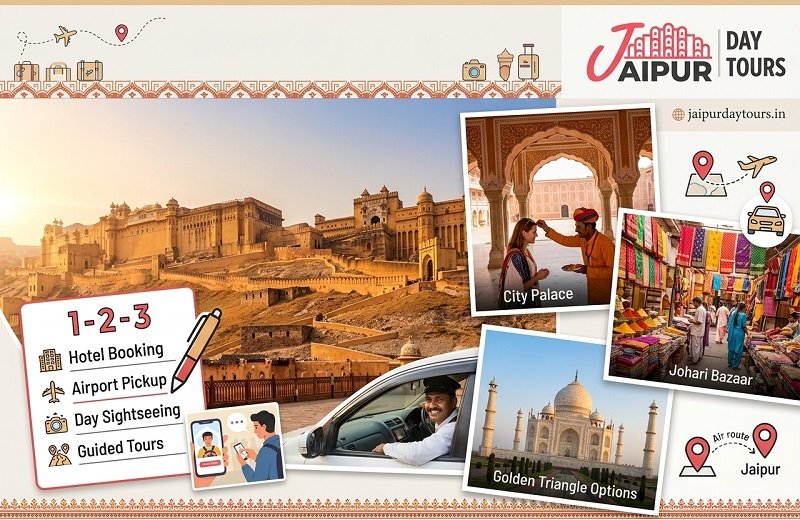
Ask a few people who have been to Jaipur what they remember most, and many will mention the confusion at the start. Amber Fort sits about 11 kilometers from the city center, the markets open late and close late, and the main sights are nowhere near each other. Plenty of first-timers lose half a day just working out who to call and how much to pay. That’s where organized trip planning earns its place, and it helps to understand how the pieces fit together before you spend anything.
What Does a Pink City Trip Plan Actually Cover?
A Jaipur Travel Package is simply a bundle of services sold at one price. Most include a hotel for a set number of nights, pickup from the airport or railway station, a vehicle for sightseeing, and a day-by-day schedule. Some add a local guide, breakfast, or an evening of folk music and dinner. They usually run from two to five days, and the sights almost always include Amber Fort, City Palace, Hawa Mahal and Jantar Mantar. What you’re really buying is coordination. Someone else books the rooms, times the drives and keeps the stops in a sensible order. What you give up is a little spontaneity, though a decent operator will let you swap a stop or add a night if you ask early.
Short City Tours When Time Is Tight
If you only have a morning, a Half Day Jaipur Sightseeing Tour is the usual answer. It takes around four or five hours and fits in two or three stops. A common route covers Hawa Mahal from the street, the City Palace, and Jantar Mantar, the stone observatory built under Maharaja Sawai Jai Singh II and listed by UNESCO in 2010. Amber Fort is often left out of the short version because the climb and the queues eat up the time. Go early. By eleven the sun is harsh, the tour buses have arrived, and the courtyards stop being pleasant.
Private Vehicles and Road Comfort
Getting around is where most people feel the difference between a stressful day and an easy one. Car Rental Services in Rajasthan generally come in two forms: a car with a driver, or self-drive. Most visitors choose the driver because city traffic, cows on the road and unmarked turns are hard to handle on a first visit. Ask what the quoted rate includes. Fuel, tolls, parking and the driver’s night allowance are sometimes charged on top, especially on multi-day trips. A reliable provider will give you these details in writing before you pay a deposit, not after.
Quick Rides Between Hotels and Bazaars
For short trips, such as hotel to bazaar or bazaar to dinner, hiring a car for the whole day makes little sense. A Jaipur City Cab booked through an app or a local desk is usually cheaper and quicker. Fares are either metered or fixed at booking, so confirm which one applies before you get in. Save the driver’s number and check that the plate matches your booking. Around busy spots like Johari Bazaar or the Amber Fort parking area, it’s tempting to jump into the first vehicle that offers a ride, but a booked one is the safer choice.
Delhi, Agra and Jaipur as One Route
Jaipur rarely stands alone in an itinerary. Many people see it as one corner of a loop with Delhi and Agra, roughly 700 kilometers in total. Sold as Golden Triangle Tour Packages, the circuit usually takes between five and seven days. Delhi gives you the Mughal and colonial layers, Agra has the Taj Mahal and its fort, and Jaipur adds the Rajput palaces. The benefit is that transport and hotels are lined up for you. The drawback is pace: long drives between cities mean you often arrive tired. If you can add one extra night in the middle, do it.
Seeing Agra From a Jaipur Base
Sometimes travelers stay in Jaipur and still want to see the Taj Mahal. A Day Trip From Jaipur to Taj Mahal can be done, but it’s a long day. Agra is roughly 240 kilometers away, and the road takes four to five hours each way, longer if traffic is heavy. Expect to leave before six in the morning and get back after dark. The monument is closed on Fridays, so check the weekday before you commit. Many drivers stop at Fatehpur Sikri on the way. It’s worth the detour, since it breaks up the drive and the red sandstone city is impressive in its own right.
Questions to Ask Before You Pay
Before paying anyone, read the inclusions and exclusions slowly. Check whether monument tickets are covered, since Indian and foreign visitors pay quite different fees. Ask about cancellation terms, the vehicle type, and whether the guide holds a government license. Independent review sites tell you more than testimonials on the seller’s own page. Be cautious with prices that sit far below everyone else’s. The gap usually gets filled later with extra charges, shopping stops you didn’t ask for, or a rushed schedule. A clear written itinerary with a named contact person is the best sign you’re dealing with a serious operator.
Season, Budget and Pace
Timing changes everything. October to March is the comfortable season, with clear skies and mild afternoons. It’s also the busiest, so good rooms and drivers go quickly. Between April and June, temperatures often pass 40 degrees Celsius and midday sightseeing becomes hard work, although prices drop. The monsoon, from July to September, turns the hills around Amber green and thins out the crowds. Budget is the other factor. Heritage hotels in the old city cost far more than simple stays near the railway station, and that one choice often decides the total. Settle your priorities first, then ask for quotes.
Conclusion
A good Jaipur Travel Package takes much of the guesswork out of a trip to Rajasthan’s capital. It puts stay, transport and sightseeing under one plan, and it can be adjusted to the days and money you actually have. The approach is simple enough. Decide how long you can stay, ask for a written itinerary, confirm what’s included and what isn’t, and leave some room for surprises. Do that, and the forts, palaces and bazaars become far easier to enjoy.
Frequently Asked Questions (FAQs)
Que. How far in advance should I book a trip to Jaipur?
Ans. For the peak season between October and March, two to four weeks ahead is sensible. You get a wider choice of hotels and drivers, and prices are usually lower than last-minute rates.
Que. Are monument entry fees usually included?
Ans. It depends on the provider. Some cover tickets for the main sites, while others list them as an extra. Check the inclusions list before you pay.
Que. What is the best time of year to visit Jaipur?
Ans. November to February is the most comfortable, with pleasant days and cool evenings. Summers can cross 40 degrees Celsius, which makes outdoor sightseeing tiring.
Que. Can I change a ready-made itinerary?
Ans. Most reputable operators allow small changes, such as adding a night, swapping a hotel or dropping a stop. Changes can affect the price, so ask for a revised written quote.
Que. Is it safe to travel with a private driver in Rajasthan?
Ans. Generally, yes. Choose a registered operator, ask for the driver’s name and vehicle details in advance, and share them with someone you trust. Licensed providers are accountable for their staff and vehicles.
