
Most people picking Rajasthan for a first trip run into the same problem. There’s too much to see, and everything is further apart than the map suggests. A city that looks close to another on screen can mean six hours in a car. That’s the main reason first-timers start asking whether a ready-made plan is worth it, and honestly, the answer depends on how you like to travel.
Why Jaipur Suits a First Trip to Rajasthan
Jaipur is the state capital and one corner of the Golden Triangle, along with Delhi and Agra. UNESCO added the walled city to its World Heritage list in 2019, and the Jantar Mantar observatory had already been listed in 2010. Most of the big sights sit fairly close together, so you don’t lose half your day in traffic. Trains, flights and highways all connect here, which is why many travelers begin their Rajasthan journey in this city and branch out later.
What a Package Usually Covers
Let’s be clear about what you’re actually buying. Jaipur Tour Packages generally bundle airport or station pickup, hotel nights, a car with a driver and a loose daily plan. Some add a guide, a few meals or help with monument tickets. You pay one price and skip dozens of small decisions. The trade-off is flexibility. If you love sitting in a courtyard for two hours, a tight schedule can feel like being hurried along. My advice is simple: ask for the itinerary in writing, with inclusions and exclusions listed. If an operator can’t give you that, move on.
A Day in the Old City
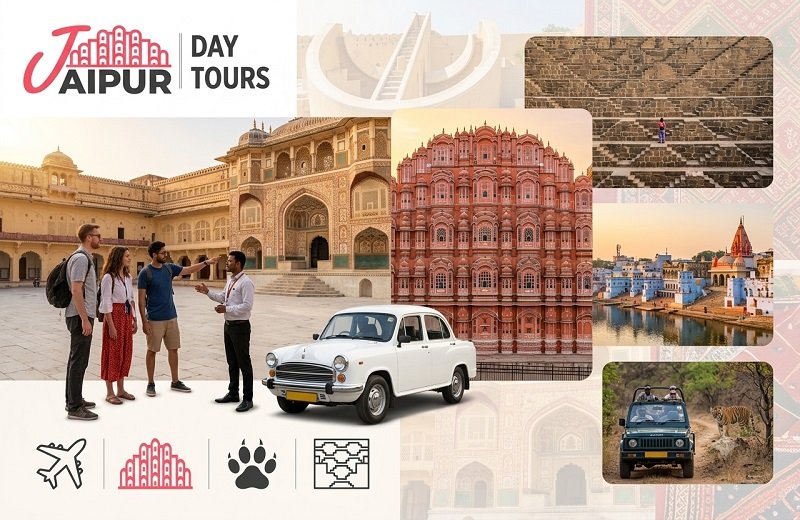
Short on time? A Jaipur Local Sightseeing Tour is the easiest way in. It normally takes in Amber Fort, the City Palace, Jantar Mantar and a quick stop outside Hawa Mahal, with a little time for the bazaars. Reach Amber early. By ten the courtyards fill up, and the morning light on the sandstone is far better for photos. A decent guide makes a real difference here, because the Rajput and Mughal layers in the architecture are hard to spot on your own. You won’t see everything in one day. You will, however, learn which places deserve a second visit.
Going Beyond Jaipur
Plenty of visitors end up wanting more than one city. Rajasthan Trip Packages often connect Jaipur with Jodhpur, Udaipur, Jaisalmer or Bikaner, and each one feels different: blue rooftops in one, lake palaces in another, dunes further west. The catch is travel time. Between cities you can easily spend five to seven hours on the road. Try to cover too many places and you’ll spend the trip staring out of a car window. For a first visit, two or three bases are plenty. Stay two nights in a place where you can, and keep one evening empty.
Tigers at Ranthambore
Wildlife is a separate kind of trip, and it isn’t for everyone. A Jaipur Ranthambore Tour heads to Ranthambore National Park in Sawai Madhopur, roughly 180 kilometers away, which is about four hours by road. The park is known for its tigers and for a ruined fort standing inside the forest. Nobody can promise a sighting. Most people who see a tiger have booked more than one safari, so plan for at least two. Check the season as well, since the park closes during the monsoon months, typically July to September. It adds cost and time, so it’s best kept for those who truly want it.
Chand Baori and Abhaneri
Some side trips don’t need a whole day. Abhaneri Jaipur outings are a good example, since the village sits about 90 kilometers away on the road to Agra. Its famous stepwell, Chand Baori, drops through thousands of steps arranged in sharp triangular patterns. People built it to store water in a dry landscape, and standing at the edge, you can see how much planning went into it. You need about an hour there. Go early, wear shoes with decent grip, and expect the stone to be slippery in places.
Pushkar, a Day Away
Pushkar is a small town wrapped around a holy lake, about 145 kilometers west of the capital. A Jaipur Pushkar Tour Package usually includes the Brahma Temple, which is one of the very few in India devoted to Brahma, plus time on the lake steps. The town’s camel fair happens around the full moon in Kartik, usually November, and it fills the place with traders and herders. Cover your shoulders and knees at temples. Some people near the ghats will offer flowers and then ask for money, and a calm “no, thank you” works fine. If you have spare time, Ajmer is a worthwhile stop on the way.
Things to Check Before You Pay
Whether you book a package or plan by yourself, a few checks save headaches. Season comes first. October to March is the comfortable window, while May and June can push past 40 degrees Celsius. Read what’s included, and ask whether entry fees, guide charges and taxes are covered. Look up reviews on independent sites, not only the company’s own page. Ask what happens if the weather or the road changes your plans, and what the cancellation terms are. And be careful with prices that look too good. A very low rate sometimes comes with surprise shopping stops or a weaker hotel. An honest operator won’t mind your questions.
Conclusion
So, are packages good for first-timers? In most cases, yes. They take the stress out of unfamiliar roads, long distances and last-minute bookings, and they leave you free to enjoy the places themselves. Going alone gives you more freedom, but it takes more research and more energy. If you do choose Jaipur Tour Packages, match the plan to what you actually care about, keep the schedule realistic and read every line before paying. A little preparation goes a long way here.
Frequently Asked Questions (FAQs)
Que. How many days are enough for a first visit to Jaipur?
Ans. Two to three days cover the main forts, palaces and markets without rushing. Add a day or two if you want side trips.
Que. What is the best time of year to visit?
Ans. October to March is usually the best, with cooler days and clear skies. Summers are very hot, and the monsoon brings humidity.
Que. Are guided packages safer than traveling alone?
Ans. They offer more structure, local knowledge and arranged transport, which many newcomers find reassuring. Solo travel is common too and works well with some preparation.
Que. Can I change an itinerary to match my interests?
Ans. Often, yes. Many operators adjust routes, hotels and activities if you ask. Tell them early whether you care most about history, food or wildlife.
Que. Should I book in advance?
Ans. In the peak winter months and during festivals, yes, because hotels and safaris fill up quickly. Booking early also gives you time to compare options.
