
Most people arrive in Jaipur with an empty suitcase and a vague plan to “pick up a few things.” A few hours later they’re holding a rug they never planned on, a bag of bangles, and no idea whether they overpaid. It happens a lot. A Jaipur Private Shopping Tour fixes a good part of that, because someone local walks with you and nobody is hurrying you toward the next stop.
Hand Block Printed Textiles Worth Bringing Home
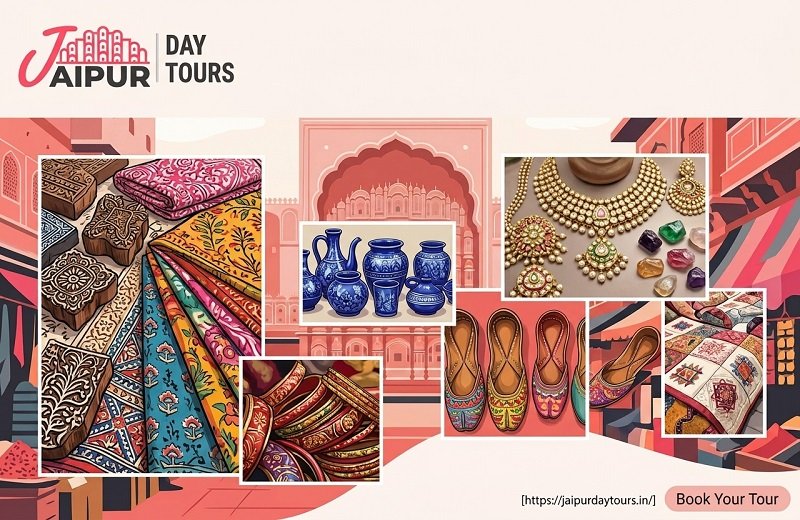
Let’s start with the easy win. Block printed cotton from Sanganer and Bagru is cheap, useful and genuinely made by hand. A printer dips a wooden block in dye, presses it onto the cloth, lifts it and does it again, hundreds of times. Check the edges of a pattern. If every line meets perfectly, a machine probably did the job. Small wobbles are a good sign. A few meters of fabric, a scarf or a set of cushion covers will last you years.
Blue Pottery and Handmade Home Decor
Blue pottery surprises people because there’s no clay in it. It’s quartz, glass and a few binding materials, glazed in that deep cobalt color. Jaipur holds the Geographical Indication tag for it, so it’s a real local product. Pick small things like coasters or little dishes, since they survive the trip home better. Turn each piece over and check the base, because hairline cracks like to hide there. Then get it wrapped in several layers of paper.
Jewelry and Gemstones: Buying With Care
Jewelry is where Jaipur’s reputation is biggest and where mistakes cost the most. Much of the gem trade centers on Johari Bazaar. Before you hand over money, get a written bill showing what the stone is, how much it weighs and whether it has been heated or treated. Anything costly should come with a lab certificate. If a seller keeps repeating “today only,” walk out. Silver is easier for a first purchase, and a hallmark tells you its purity. Kundan and Meenakari pieces are lovely, but compare them across three or four shops.
Footwear, Bangles and Small Souvenirs
Mojaris are leather slip-ons with embroidery or beads on top, and they get comfortable surprisingly fast. Sizes aren’t standard, so try them on and walk a few steps. Around Tripolia Bazaar you’ll find lac bangles in every color. Jaipuri quilts deserve a look too: thin, light, and warm enough for a cold night. Spices and sweets make nice gifts, as long as you glance at the date on the packet.
How a Private Shopping Tour Is Usually Organized
Here’s how these tours usually run. You tell the organizer what you want (fabrics, jewelry, home decor, gifts) and roughly what you’d like to spend, and the route is built from that. You get a car, plus a driver or guide who knows which lane the printing workshop is down. That alone saves an hour. Stops often include a block printing unit, a pottery studio, maybe a gem cutting workshop, and a bazaar or two. The guide translates, explains the craft and gives you a feel for fair prices. For a Jaipur Private Shopping Tour to be worth it, be honest about your budget and ask for a receipt every time. No decent operator will pressure you, and you can leave any shop without buying.
Combining Shopping With Short Sightseeing
You don’t have to shop all day. A Half Day City Tour Jaipur splits things nicely: Hawa Mahal, the City Palace and Jantar Mantar in the cooler morning, then bazaars after lunch. Check opening days first, though. Some markets close on set days, and it’s annoying to find that out at the gate.
Moving Between Markets With Your Purchases
Shopping adds weight fast. A quilt, some fabric and a box of pottery are a pain to carry through crowded streets. This is where a Car Rental Service in Jaipur earns its fee: everything stays in the boot and you keep walking. Just ask beforehand how the rate works, whether it’s by hours or kilometers, and whether waiting time costs extra.
Local Taxis for Flexible Bazaar Hopping
Don’t need a car all day? A Jaipur Sightseeing Taxi for a few hours is often enough. Say you want Bapu Bazaar for fabric, then Sanganer for printing units. A taxi gets you there without the parking headache in the Old City. Agree on the fare first, and ask the driver where he’ll wait when a lane is too narrow for a car.
Shopping on a Longer Rajasthan Route
Many visitors reach Jaipur as part of a bigger loop. Golden Triangle Tour Packages From Delhi & Jaipur usually add Agra, and Jaipur ends up being where people shop the most, simply because the choice is so wide. Try to keep one afternoon completely free. And hold off on fragile things like ceramics until later in the trip.
Why Rushed Day Trips Rarely Suit Shoppers
Some people try a Jaipur Agra Same Day Tour. It can be done, but the road eats several hours each way, so there’s very little time left at either end. Shopping in a hurry is how people overpay. If crafts matter to you, give Jaipur a day of its own.
Practical Tips for Ethical and Smart Buying
A few small habits make a big difference. Check prices at two or three shops, because first quotes in tourist areas are often well above a fair price. Bargain, but be kind about it, since the artisan needs to earn something. Keep every receipt, especially for jewelry, and ask about shipping for large items like carpets. And if someone offers you an “antique,” be careful. Taking genuine antiquities out of India is regulated, and a seller who waves that away isn’t being honest with you.
Conclusion
Jaipur has a lot to offer, but not everything is worth buying. Block prints, blue pottery, silver, mojaris and quilts are the safest bets. Ask questions, look closely, keep your receipts and don’t be afraid to say “let me think about it.” You’ll come home with things you actually use, not things you regret.
Frequently Asked Questions (FAQs)
Que. Which items should you buy first in Jaipur?
Ans. Block-printed fabrics, blue pottery, silver jewelry and mojari shoes. They’re easy to find, reasonably priced and simple to compare between shops.
Que. Is it safe to buy gemstones as a tourist?
Ans. It can be, with precautions. Buy only from sellers who give a written invoice, state whether the stones are treated, and provide a lab certificate for expensive pieces.
Que. How much time should I set aside for shopping?
Ans. Four to five hours is enough for two or three areas. If you also want to visit workshops, a full day is more comfortable.
Que. Should I bargain in Jaipur markets?
Ans. Yes, a little bargaining is normal. Stay polite, compare prices first and don’t push so low that it becomes unfair to the artisan.
Que. What is the best time of day to shop?
Ans. Late morning to early evening, since most shops are open. In summer, the late afternoon is more pleasant. Check market closing days in advance.
