
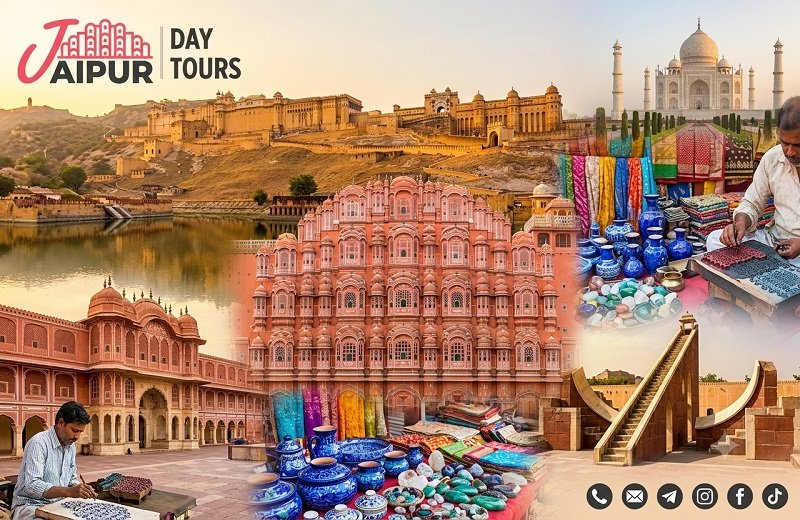
Most people arrive in Jaipur already convinced they know the place. Pink walls, camel carvings on old doorways, forts sitting up on the hills – those images get around. Reality is a bit rougher around the edges. Cars squeeze into lanes that were laid out for foot traffic and bullock carts, not engines. A vendor might quote you double the price simply because you look like you just landed. And history isn’t tucked behind museum glass here so much as built into the walls people are still living behind today. So if a Jaipur Sightseeing Tour is on your calendar, it helps to walk in with a few practical things sorted out first, rather than just a list of photo stops.
Best Time to Plan Your Trip
Mild weather isn’t really a thing Rajasthan does. From about April to June, the city bakes – daytime highs push past 40 degrees Celsius, and standing in an open courtyard at noon starts to feel less like sightseeing and more like an endurance test. Monsoon brings the temperature down, but it swaps one problem for another, since a sudden downpour can wipe out an entire afternoon’s plans. Ask around and most people will point you toward October through March. Mornings feel crisp then, evenings are comfortable, and you can actually sit outside for dinner without sweating through your shirt. Get an early start each day if you’re able to. By mid-morning the forts fill up and the heat climbs, and the light for photographs is better before nine anyway.
Top Attractions Worth Adding to Your Itinerary
Amber Fort shows up on nearly every list, and it deserves to. Step inside the Sheesh Mahal and a single candle flame, reflected across the mirrored walls, multiplies into what looks like a thousand tiny lights. The climb up, whether on foot or by jeep, opens onto views of Maota Lake that photos never quite capture properly. City Palace is still partly home to the former royal family, and walking through its courtyards gives you a feel for how ruling and everyday living used to happen under the same roof. Then there’s Hawa Mahal – that pink honeycomb facade everyone recognizes – built with hundreds of small latticed windows so royal women could watch street festivals below without being seen themselves. It’s a small detail, but it says something about the era. Jantar Mantar doesn’t hit you visually at first. Once someone explains what each stone instrument was actually built to track, though, the astronomy packed into that eighteenth-century site starts to feel remarkable. Try to see all four in one day and you’ll likely remember none of them well.
Jaipur Private Shopping Tour for a Personal Experience
Shopping here isn’t a footnote to the trip. For plenty of visitors, it’s the part they end up talking about most once they’re home. Block-printed textiles, blue pottery, loose gemstones, leather juttis – Jaipur produces all of it, and the markets selling it stretch across both the older quarters and the newer parts of the city. Bapu Bazaar and Johari Bazaar rank among the busiest, and for someone seeing them for the first time, they can feel like a lot to process without any context. That’s where a Jaipur Private Shopping Tour earns its cost. Rather than getting dropped at shops that quietly pay drivers a commission, a private guide typically walks you into workshops where you can watch the craft happen right in front of you, where pricing tends to be more honest, and where nobody’s pressuring you to buy something you didn’t come looking for. It works well for anyone who’d rather understand what they’re spending on than hand over cash and hope for the best.
Combining a Jaipur Agra Same Day Tour with Your Trip
Jaipur and Agra sit close enough that plenty of travelers try to knock out both cities in one trip, and that’s exactly why a same-day option exists. A Jaipur Agra Same Day Tour usually means leaving well before sunrise, spending a few hours at the Taj Mahal – sometimes Agra Fort too – then driving back to Jaipur that same night. It’s a long day. Several hours of road time each way, and it’s not the relaxed way to take in Agra. Even so, if your schedule doesn’t allow for an extra night on the road, it’s about the only realistic way to fit both cities in. Just accept going in that the drive is real and the wake-up call will be earlier than you’d probably like.
Local Food and Culture to Experience
Rajasthani food gets less attention than it should on a first visit, which is a bit of a shame. Dal baati churma – lentils, baked wheat balls, sweet crumbled wheat – is worth ordering once, even if it sits heavier than what you’d normally eat midday. Street stalls around the old city sell pyaaz kachori that locals pick up the same way office workers elsewhere grab a quick breakfast on the way to work. Past the food, crafts like hand-block printing and miniature painting are still practiced by families who’ve been doing this for generations – not something dusted off for tourists. Spend even twenty minutes inside a working studio and you’ll come away understanding Jaipur better than most guidebook chapters manage.
Practical Tips for First-Time Visitors
Dress for the heat, not for a photo shoot – loose, breathable fabric will matter more here than it has almost anywhere else you’ve traveled. Cover shoulders and knees at temples regardless of the season. Bargaining is expected in most markets, so treat it as a normal back-and-forth rather than a fight, and you’ll usually land somewhere fair. Carry water with you at all times, not just during the hot months. And keep some cash handy, because smaller shops and roadside food stalls still run on it, even as bigger stores lean more toward digital payments these days.
Conclusion
Jaipur rewards the traveler who’s willing to slow down more than the one racing through a checklist of monuments. The forts and palaces live up to their reputation, no argument there, but so do the markets, the food stalls, and the everyday rhythm of a city that’s been reshaped and rebuilt for centuries by the people living in it. Whether you’re leaning toward a structured sightseeing route, a focused shopping afternoon, or a long day trip out to Agra, a little groundwork beforehand is what turns the visit into something you actually remember, rather than just something you checked off.
Frequently Asked Questions (FAQs)
Que. What is the best time of year to visit Jaipur?
Ans. October through March offers the most manageable weather for walking around the city, while April to June can get uncomfortably hot.
Que. How many days should I plan for Jaipur?
Ans. Two to three full days is usually enough to cover the major forts, palaces, and markets without rushing.
Que. Is it safe to walk around Jaipur’s old city?
Ans. For the most part, yes, especially during daylight hours – just stay aware of traffic and busy market lanes as you would anywhere else.
Que. Is a same-day trip to Agra actually worth it?
Ans. It depends on your schedule – it’s a long day with several hours of driving each way, so travelers with more flexibility might prefer an overnight stay instead.
Que. What’s a mistake first-time shoppers often make in Jaipur?
Ans. Letting a driver take them straight to a “recommended” shop, since these often carry inflated prices to cover the commission paid out.
