
Ask ten people what they remember most about Jaipur, and at least half will mention the markets before they mention the forts. There’s a reason for that. The old city was laid out in the eighteenth century by Maharaja Sawai Jai Singh II, and the bazaars from that era are still doing business in more or less the same spots today. You won’t find air-conditioned showrooms here so much as narrow lanes packed with family-run stalls, each one specializing in something specific – gems in one street, brass in another, fabric a few turns away. If you want to understand Rajasthani craft, walking through these markets teaches you more than any museum display would.
Johari Bazaar for Traditional Jewelry
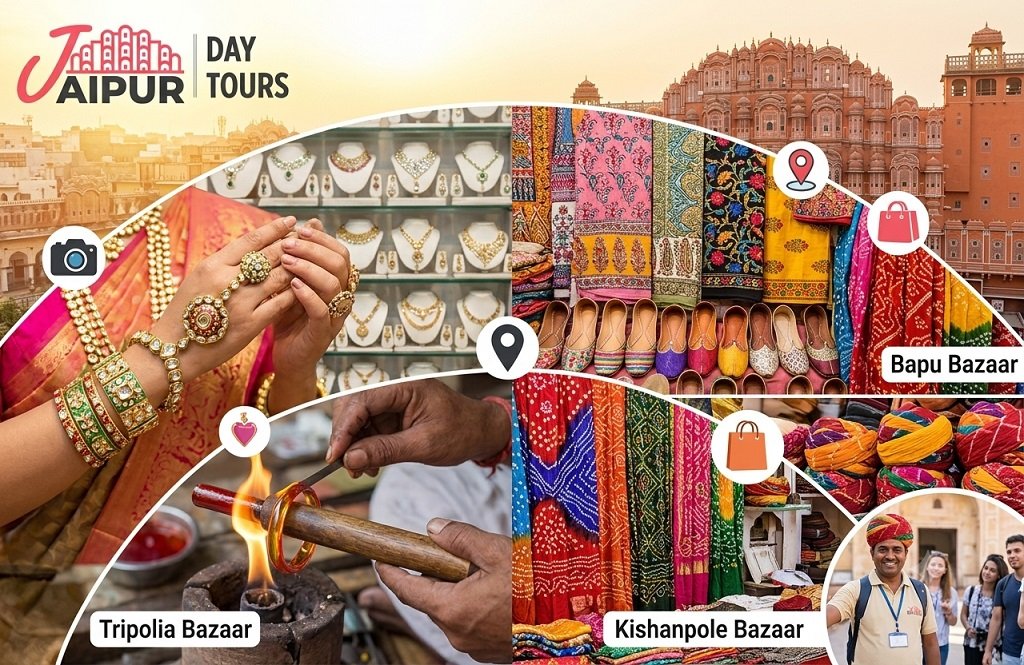
Johari Bazaar has been Jaipur’s jewelry street since the city’s earliest days, and jewelers here still work the way their grandfathers did. Kundan and meenakari – the two styles most associated with Jaipur – are made and sold right on the premises in many shops, and a fair number of them will let you peek into the back room where the actual stone-setting happens. Prices swing a lot depending on the metal purity and the quality of the stones, so before spending anything serious, ask for certification. Not every shop will offer it upfront, and that’s worth noticing.
Bapu Bazaar for Textiles and Footwear
Bapu Bazaar sits a short walk from the jewelry lanes, and it’s where most people end up buying block-printed fabric, mojaris (the pointed leather juttis Rajasthan is known for), and camel leather bags. It’s busier and more mixed-use than Johari – you’ll see locals buying bedsheets alongside tourists picking out dupattas. If you ask, most vendors are happy to point out the difference between hand block printing and the machine-printed stuff sold nearby, and once you’ve seen both side by side, the difference is obvious.
Tripolia Bazaar for Lac Bangles and Metal Crafts
A few streets from the City Palace, Tripolia Bazaar is where Jaipur’s lac bangle trade lives. Watching the process is honestly more interesting than buying the bangles themselves – artisans soften the resin over small open flames, color it, and shape it by hand into bangles right there on the spot. The market also carries brass and copper cookware and some iron work, though bangles are what it’s known for. It’s quieter than the bigger markets, so if crowds aren’t your thing, this is an easier place to browse.
Kishanpole Bazaar for Block-Printed and Tie-Dye Fabrics
Kishanpole is a bit rougher around the edges than the more polished tourist stops, and that’s part of what makes it worth visiting. Bandhani sarees, dupattas, and turbans sell in real volume here, often straight from small workshops rather than storefronts built for browsing. There’s also a section selling religious idols and puja items, since a handful of old temples sit nearby. Anyone genuinely curious about how fabric trading works in the old city, rather than the version dressed up for visitors, should spend time here.
Nehru Bazaar for Everyday Rajasthani Wear
Nehru Bazaar isn’t trying to impress anyone. It’s where locals actually shop – juttis, bags, everyday clothing – at prices noticeably lower than the more visited markets. If your goal is buying a couple of useful things rather than hunting for something decorative, this is probably the market for that. Bargaining is expected here, as in most of Jaipur’s older bazaars, so don’t feel awkward about it.
Planning a Jaipur Private Shopping Tour
The markets blend into each other more than maps suggest, and it’s easy to end up lost in a lane you didn’t mean to enter. Shopkeepers in the busier tourist stretches also sometimes quote higher prices to visitors who clearly don’t know the going rate. A Jaipur Private Shopping Tour deals with both problems by putting a local guide with you who already knows which shops sell the real thing, how to judge jewelry or fabric quality on sight, and roughly what a fair price should be. These tours tend to be flexible about pacing too – if you want to spend an extra hour in Johari Bazaar looking at meenakari work instead of rushing through five markets, that’s usually fine. For anyone who’d rather shop with some guidance than guess their way through, this approach makes the whole experience less stressful.
Combining Jaipur With Agra on a Same Day Tour
Not everyone has the luxury of extra nights on the road. For travelers working with a tight schedule, a Jaipur Agra Same Day Tour makes it possible to shop through Jaipur’s bazaars in the morning and still reach the Taj Mahal before it closes for the day, though how well that actually plays out depends a lot on traffic and how early you’re willing to start. It’s a long day by any measure, and it suits people who don’t mind trading some comfort for covering two cities in one trip.
Exploring Golden Triangle Tour Packages From Delhi & Jaipur
If time isn’t quite as tight, Golden Triangle Tour Packages From Delhi & Jaipur spread the same route – Delhi, Agra, Jaipur – across several days instead of cramming it into one. Most of these packages build in real shopping time in Jaipur’s old markets, alongside the usual fort and palace visits in each city. Compared to squeezing everything into a single day, this gives you room to actually sit with a jeweler or watch a block printer work, rather than just walking past.
Tips for Shopping in Traditional Markets
Bargaining isn’t optional etiquette here – it’s how prices actually get set. Starting around half the first quote is a reasonable opening move in most textile and handicraft shops. It also pays to check a few stores before committing to anything in gemstones or jewelry, since quality (and honesty about that quality) varies more than you’d expect even within the same market. Early morning or late afternoon visits are easier too, especially between March and September when midday heat makes browsing uncomfortable.
Conclusion
None of Jaipur’s markets do the same job. Johari Bazaar is for jewelry, Bapu Bazaar covers textiles and footwear, Tripolia is the place for lac bangles, Kishanpole handles fabric at scale, and Nehru Bazaar is where you go for the everyday stuff. Together they give a fairly honest picture of what Rajasthani craft actually looks like, not the simplified version. Whether you go it alone or bring a guide along, knowing what each bazaar specializes in beforehand makes the difference between wandering and actually shopping with a plan.
Frequently Asked Questions (FAQs)
Que. Which Jaipur market is best for buying jewelry?
Ans. Johari Bazaar is Jaipur’s main jewelry market, best known for kundan and meenakari pieces made by local artisan families.
Que. Is bargaining acceptable in Jaipur’s traditional markets?
Ans. Yes, bargaining is standard practice in most of Jaipur’s old bazaars, particularly for textiles, handicrafts, and footwear.
Que. What’s the best time of day to visit Jaipur’s markets?
Ans. Early morning or late afternoon tends to work best, since it avoids both the midday heat and the busiest crowds.
Que. Can Jaipur and Agra realistically be covered in one day?
Ans. It can be done with an early start and a tight schedule, though it means long hours of travel and less time in each city.
Que. What’s the real difference between Bapu Bazaar and Johari Bazaar?
Ans. Bapu Bazaar is built around textiles, footwear, and leather goods, while Johari Bazaar focuses almost entirely on jewelry and gemstones.
