
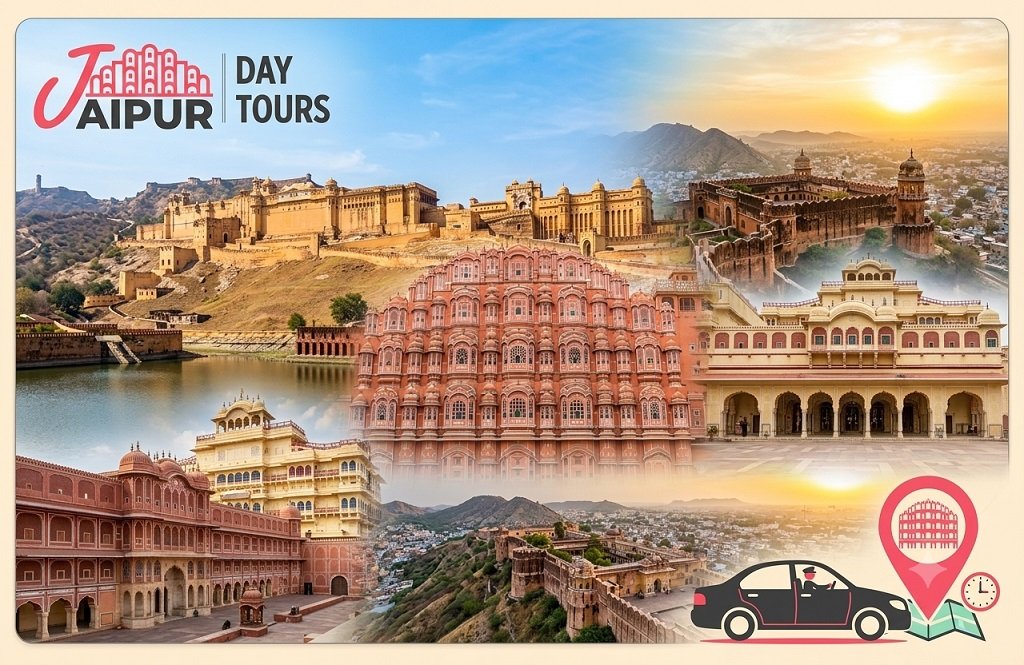
I still remember standing at the base of Amber Fort, sweating in the March heat, wondering if the climb was worth it. It was. Jaipur does this thing where every fort or palace makes you rethink the last one, because they’re all trying to do something different. One’s about defense, another’s about showing off, another was just somewhere for a king’s wives to sit through an afternoon. If you only have a couple of days here, picking the right five or six matters more than you’d think. Below is my take on which ones to see, plus a quick word on why a Jaipur Private Day Tour might save you a lot of unnecessary back-and-forth across the city.
Amber Fort: A Glimpse into Rajput Grandeur
Eleven kilometers out from the main city, up on a hill, that’s Amber Fort for you. Most itineraries start here, and honestly, that’s the right call. The pale yellow sandstone catches the light in a way photos never quite manage. Rajput and Mughal styles get mixed throughout the complex, though the standout is the Sheesh Mahal – a hall covered edge to edge in mirror work, built so that one candle could light up the whole ceiling. Wander past the main hall and you’ll find courtyards and narrow passageways that go on longer than you’d guess from outside. Go early. By ten or eleven, both the crowds and the sun get difficult.
City Palace: Heart of Jaipur’s Royal Legacy
Unlike most of the sites on this list, City Palace is still, in part, a home. Descendants of the royal family live in one section of it even now, which is an odd thing to process while you’re walking through as a visitor with a camera. The rest functions as a museum – old royal costumes, weapons, manuscripts, all reasonably well preserved given their age. Chandra Mahal, the seven-story building right at the center, stays private, but the Mubarak Mahal and Diwan-i-Khas are open. This place tells a different kind of story than the forts do. Less about battles, more about how a kingdom was actually run day to day.
Hawa Mahal: Palace of Winds
Everyone photographs Hawa Mahal. Everyone. And once you’re standing in front of it, you get why. The facade has 953 small windows built into a honeycomb pattern, originally meant to let royal women watch street life below without being seen themselves. Here’s the part that catches people off guard: behind that elaborate front, the building is thin. Almost like a screen someone propped up rather than an actual palace with depth to it. You won’t need much time here, maybe twenty minutes, so plenty of people grab coffee at a rooftop café across the street afterward, which honestly gives you a better view of the thing anyway.
Jaigarh Fort: Guardian of the Pink City
Jaigarh sits above Amber Fort and was built for one reason – defense, plain and simple. It’s aged well. Inside there’s Jaivana, one of the largest wheeled cannons anywhere in the world, and an underground water system that still impresses engineers who visit today. No modern tools, and yet the planning holds up. Climb up to the ramparts and the view opens out over the Aravalli hills and down into the city, worth the walk on its own even without the history attached. A footpath connects Jaigarh straight to Amber Fort, so most people treat the two as one visit rather than separate stops.
Nahargarh Fort: Sunset Views Above Jaipur
Nahargarh began as a defensive wall wrapped around the city and later turned into something closer to a royal retreat. These days, people go for one reason mostly: sunset. And it’s genuinely worth building your afternoon around, because the whole city below turns gold as the light drops. There’s a step-well tucked into the grounds too, along with a row of identical apartments built for the king’s wives – made deliberately the same, from what I’ve read, so no one could accuse anyone of favoritism. It’s quieter than the other big sites, which makes it a good place to slow down after a long day of walking and heat.
Planning Your Visit with Private Transport
Fitting all five into a day or two is realistic. Fitting them in without wasting half your time in traffic requires some actual planning. That’s really the value a Jaipur Sightseeing Tour brings to the table – someone’s already worked out the order that makes sense, so you’re not zigzagging across the city for no reason. Amber and Jaigarh sit near each other. Hawa Mahal and City Palace are both tucked inside the old walls. Get the order right and you spend your day actually seeing things instead of sitting in an auto-rickshaw.
What a Private Day Tour Actually Offers
The real benefit of going private is control, plain and simple. Your own vehicle, a driver who knows the roads and, more importantly, knows when each site gets busy, and the freedom to stay somewhere longer just because you feel like it. Want an extra twenty minutes on Jaigarh’s ramparts? Fine. Want to skip a stop entirely? Also fine, nobody’s waiting on you. A Jaipur Private Day Tour typically covers hotel pickup, some help getting through ticket lines at the bigger monuments, and a schedule built around when each place actually opens and gets crowded – which matters more than most first-timers expect. For families, or anyone working around nap times and picky eaters, this flexibility tends to be the deciding factor.
Reliable Transport for a Smoother Trip
Jaipur’s layout throws people off if they haven’t spent time here before. The old city especially – narrow lanes, sudden traffic, streets that don’t behave the way a map suggests they will. A decent Car Rental Service in Jaipur takes care of most of that headache. You get a driver who already knows which route saves twenty minutes and which fort entrance won’t have you standing in a line for an hour. It matters even more once the summer heat sets in, when getting between sites quickly stops being a luxury and starts being necessary. Whether you’re passing through for a single day or sticking around to hit the markets and eat your way through the old city, having transport figured out beforehand removes one genuine source of stress from the trip.
Conclusion
Each of these places is telling its own piece of the same larger story – Rajput strength, careful craftsmanship, generations of royal life packed into stone and sandstone. Amber and Jaigarh lean toward the military and architectural side of things. City Palace and Hawa Mahal show the more everyday, cultural side. Nahargarh gives you a quieter way to end the day. See all five properly, with transport sorted ahead of time, and you can actually absorb what you’re looking at instead of rushing from gate to gate. However you plan it, give each stop a little extra room. That’s usually what makes the trip stay with you.
Frequently Asked Questions (FAQs)
Que. Which fort in Jaipur is considered the most important to visit?
Ans. Most people would point to Amber Fort first, mainly because of its scale and how well the architecture has survived, though City Palace and Hawa Mahal offer their own kind of experience worth just as much time.
Que. How much time is needed to visit all major forts and palaces in Jaipur?
Ans. One full day works if you keep moving, but two days feels more comfortable if you actually want to take in Amber Fort, Jaigarh Fort, City Palace, Hawa Mahal, and Nahargarh without rushing through any of them.
Que. Is it better to visit Amber Fort and Jaigarh Fort together?
Ans. Generally yes – there’s a walking path linking the two directly, so doing them back to back saves a fair amount of travel time compared to treating them as separate outings.
Que. What is the best time of day to visit Hawa Mahal?
Ans. Early morning tends to work best, both for how the light hits the facade and because the crowds haven’t built up yet.
Que. Are these forts and palaces suitable for elderly travelers or young children?
Ans. There’s a decent amount of walking involved, and Amber Fort and Jaigarh Fort in particular have uneven ground in places, so it’s worth pacing things slowly and using a jeep or golf cart wherever one’s available.
